The winter months of January and February can seem dull and muted. Most of the earth seems to be in a state of waiting. The trees have shed their green leaves. Most of the flowers have disappeared while waiting for Spring. Many animals even tuck themselves away to wait for warmer weather. The days are shorter and the sun’s rays are weaker due to their low angle.
People are not exempt from this. We experience a lull in activity and thought during these months too. Many people experience fatigue, mood changes, and feelings of hopelessness due to decreased sunlight disrupting their biological clocks. Others are simply trying to recover from what feels like running a gauntlet from Halloween to Thanksgiving to Christmas to New Year’s – especially if you have kids!
Our spiritual lives experience these seasons of quiet as well. We contemplate and remember Jesus each Sunday morning as part of the Lord’s Supper, and it can be a challenge to keep these thoughts fresh and meaningful week in and week out. When you add in the factors above that come with the winter season, a meaningful communion time each Sunday can prove elusive for many.
Winter comes right between Christmas and Easter. During the Christmas season it is easy to remain focused on the birth of Jesus. We see nativity scenes in people’s yards. We hear about Mary and Jesus in songs. We sings hymns and carols throughout the season. The beginning of Jesus’s life on Earth seems to be all around us in December. During the Easter season, our thoughts are focused on the cross and the empty tomb. We dwell on the sacrifice of Jesus to pay our debt. We relish in His resurrection and the conquering of death. Easter Sunday is a declaration of the events surrounding the end of Jesus’s earthly life and a glorious celebration of what comes next for those who believe.
So, if Christmas is focused on the beginning of Jesus’s incarnate life and Easter is focused on the end, then how should we approach this weekly time of reflection in the Lord’s Supper during the months in between? I suggest one option is to focus on Jesus’s ministry. The life and teachings of Jesus are what happened between His birth and His crucifixion, and the words of Jesus, as recorded in the Gospels, make a great starting point. Jesus himself begins this way in Matthew 5:
He said: “Blessed are the poor in spirit, for theirs is the kingdom of heaven. Blessed are those who mourn, for they will be comforted. Blessed are the meek, for they will inherit the earth. Blessed are those who hunger and thirst for righteousness, for they will be filled. Blessed are the merciful, for they will be shown mercy. Blessed are the pure in heart, for they will see God. Blessed are the peacemakers, for they will be called children of God. Blessed are those who are persecuted because of righteousness, for theirs is the kingdom of heaven.
“Blessed are you when people insult you, persecute you and falsely say all kinds of evil against you because of me. Rejoice and be glad, because great is your reward in heaven, for in the same way they persecuted the prophets who were before you.
“You are the salt of the earth. But if the salt loses its saltiness, how can it be made salty again? It is no longer good for anything, except to be thrown out and trampled underfoot.
“You are the light of the world. A town built on a hill cannot be hidden. Neither do people light a lamp and put it under a bowl. Instead they put it on its stand, and it gives light to everyone in the house. In the same way, let your light shine before others, that they may see your good deeds and glorify your Father in heaven.”
May your winter’s communion times be special and fruitful.
Note: As I continue to learn the Japanese language and culture, these Spotlight posts seek to highlight things I find curious, interesting, and meaningful. The relationship between language and culture runs deep. In fact, there are many points where it gets hard to tell one from the other. “Language is not merely an indifferent mechanism for cataloguing men’s experience but the language itself affects the cataloguing process…. The language system of each culture is a fluid factor in culture; it varies with each generation and serves as clue to its thinking as well as actually coloring and molding this thinking.” In other words, if I am going to learn how to reach Japanese people, I need to understand how Japanese people think. The process of how they think is intimately intwined with the language they use. Unfortunately for us, it goes far beyond simply using “Google Translate” to come up with the right vocabulary. Language embeds the foundational concepts of culture into everyday interaction. So, deeper we go into this wonderful world of language exploration! Much of this information comes from Charles Corwin’s Biblical Encounter with Japanese Culture (Tokyo, 1967).
Kōfuku (幸福) is comprised of two characters in kanji. The first character can represent “lucky” while the second character can mean “blessing”. The original words behind this one had to do with one’s arrow hitting the mark. In an ancient hunting and fishing society, successfully taking prey or making a catch meant food, health, and prosperity. We tend to think of hunting and fishing as more skill-based activities today, but the Japanese sense of this idea leans more toward the hunter or fisherman finding his quarry because of “good fortune” rather than skill or hard work. To be sure, skill and hard work are highly prized in Japanese society, and one is expected to employ both earnestly in order to expect good results. But one’s luck is given more weight.
The Japanese concept of happiness inherits these ideas. It is primarily a way to express that things have turned out well, or that one has achieved a “full” condition. It has also evolved to include a good aspect found amidst a disaster (what we might recognize as “a silver lining”).
With respect to the Old Testament, the word “happiness” does not occur in a noun form. This can perhaps be traced to our English nuance in which “hap” seems to introduce an element of “chance” into the meaning. We use other words like haphazard and happenstance in this way. So, biblical translators almost always chose the word “blessed” instead to convey the Hebrew conviction that man comes into happiness not by chance but by Divine help.
In the New Testament, the idea of happiness remains rooted in God’s blessings, but with an added eschatological element. One may be happy based not only on possession of the quality or experience of current life, but also on the present or future rewards that come with it. The Beatitudes are a prime example. On the surface, they appear as a paradox. They renounce the very things that most people seek and think are required for happiness (wealth, power, joy). Instead, those considered “blessed” or “happy” in the Beatitudes have sacrificed their natural desires. They have given up many things that seem desirable to the natural heart, and embrace many other things that make most people wince. But just as Jesus himself experienced glorious exaltation after emptying Himself, His followers also take up their own crosses in order to receive the inheritance of the earth and a great reward in heaven.
Japanese kōfuku is strictly a happiness which consists of material benefits, fullness, wealth, and a happy turn of events. It speaks of a mystical play of events turning out in one’s favor, either positively in material blessings or negatively in the avoidance of an impending disaster. The concept of happiness is so fixed in Japanese thinking that its importance is raised almost to the ultimate in values, or the measure of all things.
Biblical concepts of happiness instead develop an emphasis on blessing over current experience. This is possible because of the promise of Jesus. There is a circle of blessing: it flows down from God the Provider to men, who in turn bless God by giving Him due thanks and worship, and the circle is completed with a heavenly life of eternal rewards.
He who was seated on the throne said, “I am making everything new!” Then he said, “Write this down, for these words are trustworthy and true.” ~ Revelation 21:5
Happy New Year! Emily and I hope that you are able to look back on 2025 with appreciation for what God has done. We are also praying that 2026 will provide many opportunities for you to share God’s blessings with those all around. We certainly feel God’s care and love through your comments and prayers.
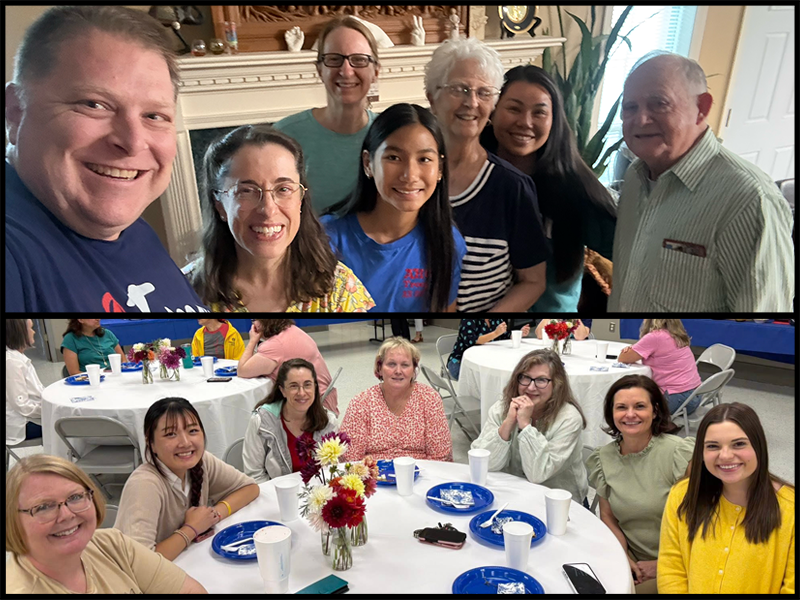
We received great news to close out 2025. A seeker had been studying the Bible on her own and started attending Tachikawa on Sundays. After some additional Bible study with Fukushima-san, she chose to commit her life to Christ on the final Sunday of the year! We rejoice with our new sister Sari Obe (seated, middle front, with glasses) as she had her sins washed away in the saving waters of baptism. Please pray for Obe-san as she joins the Tachikawa church family and begins the next part of her spiritual journey among this community of faithful believers.
As we turn our thoughts toward 2026, it is more than just a new year. Our coming transition to Japan is starting to feel more and more real. But we are not the only ones! For this post, I am focusing on what feels like the start of a new season of missions in Japan. There are a few missionaries who have been working in Japan for some time – Les and Sarah Taylor in Matsudo (Chiba prefecture), Joel Osborne in Mito (Ibaraki prefecture), and Jeanne Ray in Tomobe (also in Ibaraki prefecture). But we are excited to know that several new missionaries have committed to working in Japan as well.
William and Randi Adams recently landed in Shizuoka. There are a handful of small congregations clustered in this part of Japan about 1.5 hours southwest of Tokyo by bullet train. This is the area of Japan where Sarah Andrews worked. William and Randi are partnering with Shinozako-san, a native minister, to help revitalize these congregations. Read more about what God is doing through the Adams family through their Facebook page.
Angel Alcantar will soon join William and Randi in Shizuoka. Angel is a graduate of Freed-Hardeman University and is currently enrolled at Sunset International Bible Institute to further prepare for missions. Currently, Angel has submitted all of his paperwork and is awaiting final visa approval. You can read more on his website.
Brandon and Ocean Furbee have also decided to join the mission team in Shizuoka. Graduating from Harding University, they have felt a calling toward missions in Japan and are in the process of gathering support.
Additionally, Emily and I have been in contact with three more couples who have expressed a desire to work with missions in Japan. We pray that the Lord will open doors for these and others who are willing to step beyond the familiar and serve His kingdom in this way. This year is going to be great!
Every day they continued to meet together in the temple courts. They broke bread in their homes and ate together with glad and sincere hearts, praising God and enjoying the favor of all the people. And the Lord added to their number daily those who were being saved. ~ Acts 2:46-47
Would you like a handy way to tell people about what we are hoping to do in Japan? We have updated our one-page mission summary. It’s a quick PDF that is easy to share. Simply click on the thumbnail below!
Note: As I continue to learn the Japanese language and culture, these Spotlight posts seek to highlight things I find curious, interesting, and meaningful. The relationship between language and culture runs deep. In fact, there are many points where it gets hard to tell one from the other. “Language is not merely an indifferent mechanism for cataloguing men’s experience but the language itself affects the cataloguing process…. The language system of each culture is a fluid factor in culture; it varies with each generation and serves as clue to its thinking as well as actually coloring and molding this thinking.” In other words, if I am going to learn how to reach Japanese people, I need to understand how Japanese people think. The process of how they think is intimately intwined with the language they use. Unfortunately for us, it goes far beyond simply using “Google Translate” to come up with the right vocabulary. Language embeds the foundational concepts of culture into everyday interaction. So, deeper we go into this wonderful world of language exploration! Much of this information comes from Charles Corwin’s Biblical Encounter with Japanese Culture (Tokyo, 1967).
Dōsatsu is comprised of two characters in kanji. The first character (dō) can represent “cave” while the second character (satsu) can mean “look”. More specifically, the first usually refers to a cave or hole scooped out by flowing water. Satsu is a bit more complicated. It is actually the kanji for “look” but with a piece that means “veil” added on top. So, dōsatsu is really more of the concept of looking deeply (as into a cave) and perceiving the reality of an object.
We have some English idioms which get to a similar meaning. “Read between the lines” comes to mind, as does “See right through someone”. We also tend to use expressions like “get to the bottom of” and “determine the mood” in a parallel sense.
In the New Testament, insight often refers to spiritual discernment or understanding. We look for insight when we seek divine revelation in Scripture. We also gain “insight” when we understand someone’s innermost reality.
Japanese dōsatsu and Biblical insight both denote a seeing that is more than observation. It is seeing that cuts through the obvious and seeks to perceive something’s essence. However due to the influence of Buddhist thought, Japanese understanding of this concept has traditionally focused its attention on achieving insight through clearing away all mental impairments and attitudes. Biblical insight, on the other hand, is centered in more moral and spiritual terms. It is a seeing beyond the outward symbols of something and perceiving the inner reality that those symbols portray.
Unlike its Buddhist counterpart, Biblical insight cannot be achieved unaided, but must come through the assistance of God’s Holy Spirit. (1 Cor. 2:9-10). Rather than simply determining the essence of something, Biblical insight is more concerned with seeing the spiritual truth behind the visible words and actions.
…for it is God who works in you to will and to act in order to fulfill his good purpose. ~ Philippians 2:13
A typical Sunday morning gathering
This blog post will be focusing on Tachikawa, Japan. Emily and I have committed to working with the congregation here and we are excited to share some of the reasons for our decision. The photo above was taken during our trip last summer. Although some members couldn’t be present the day this picture was taken, it is a good representation of a typical Sunday worship gathering. Over the last two summers as we worked and worshiped alongside this small but faithful group, these people have gradually gone from anonymous Japanese individuals to beloved brothers and sisters laboring for Jesus despite tough cultural challenges.
Downtown Tachikawa
Tachikawa is a suburb on the Western side of the Tokyo metropolitan area. While not as densely populated as central Tokyo, most Americans would still consider it to be crowded. Tachikawa Station serves as a major suburban hub at the intersection of five different train lines. Current estimates suggest that at least 175,000 people transit through this station each day. Consequently, the Tachikawa area has seen a steady increase in development and is an attractive destination for people who want to live away from the congested parts of Central Tokyo yet still have easy access to all parts of the greater Tokyo area.
In particular, this part of the city is attractive to young families. Despite most areas in Japan dealing with the twin crises of low birth rates and an aging population, Emily and I have observed over the past two summers that the Tachikawa area has an abundance of families with small children. We believe this presents a number of exciting possibilities for ministry!
Tachikawa Church of Christ
For over 60 years, the Tachikawa Church of Christ has faithfully stood in this area of Tokyo as witness to the Gospel. The congregation also serves as host for the Japan School of Evangelism which utilizes the classroom and library spaces on its second floor, and dormitory lodgings on its third floor. Nao Fukushima serves as minister and evangelist along with his wife Noriko. Tachikawa is one of Japan’s larger congregations, with a membership around 30 individuals.
When most people think of missionary activities, their first thoughts often tend toward evangelizing a local community and establishing a new church plant. Spreading the Gospel into new areas is critical Kingdom work, and for many missionaries around the globe this is the only option available. So when Emily and I talk with people about our plans in Tachikawa, they are often surprised that our work will focus on an existing congregation that already has a minister in place. There are several reasons for this.
It would be very difficult to plant a new church, legally. In recent history, Japan has had to endure reprehensible behavior from a variety of religious groups. From the sarin gas attacks in Tokyo subways by cult members to extortionist fundraising practices by other groups, a number of events have caused the Japanese government to be extremely reticent to issue new licenses under the national Religious Corporation Law. Ultimately, the behavior of these non-Christian groups has put the brakes on any process which would recognize a new church plant. Without this legal designation, it would be impossible to enter into contracts for rental agreements, bank accounts, building projects, taxes, and a whole host of other legal relationships needed to exist as a congregation. The best we could hope for would be to operate as a “satellite” location of an existing congregation, requiring the host group to sign for everything.
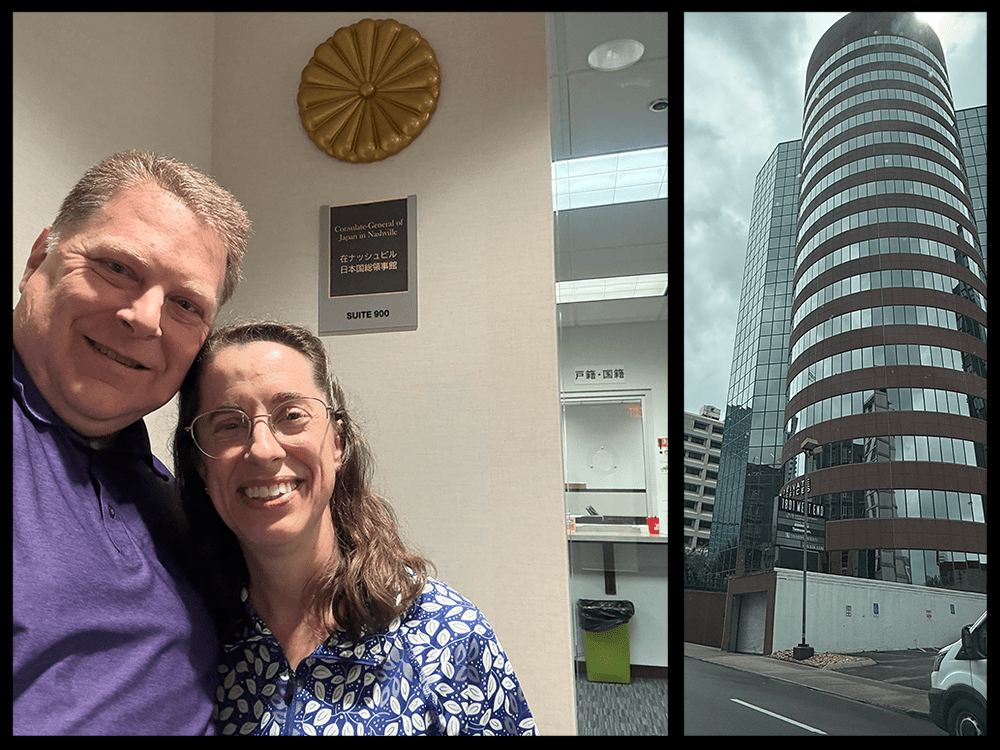
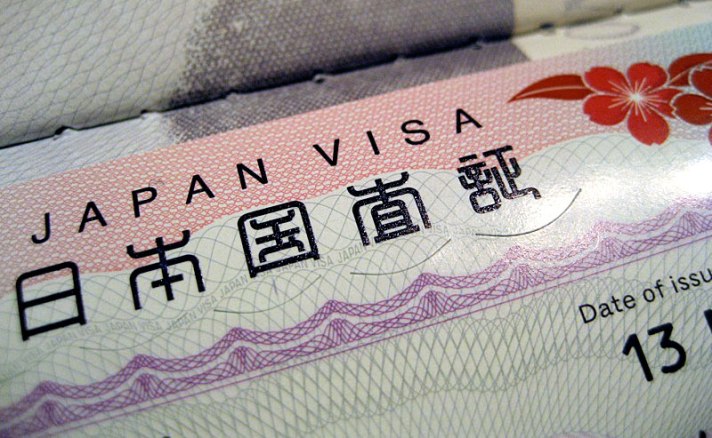
Similarly, the visa standards in Japan require Emily and I to be sponsored by an existing Japanese congregation. While it is possible to ask the Tachikawa congregation to sponsor our visa in order for us to work in a different place, we are hesitant to ask the congregation’s leaders to shoulder additional administrative responsibilities in this way. I am confident they would be willing to do so, since it is a necessity of the Japanese visa system, but we don’t wish to impose upon these brothers and sisters who already give so much of their time serving the Lord.
More importantly, Emily and I have committed to working with the Christians in Tachikawa because they have asked us to come. We see great opportunity for mission work within this church family and among this community. Although this congregation has a long history and faithful core membership, they have struggled to bounce back from the disruption of the COVID pandemic. Nao and Noriko Fukushima serve the congregation tirelessly, but they both must work secular jobs to make ends meet. Other core members faithfully help week in and week out, but the Tachikawa congregation would greatly benefit from an infusion of new energy. This is a main reason why they began seeking missionaries to come and join their work.
Godly mentors are a blessing to be treasured. As Emily and I transition to life as Japanese missionaries, there will be many personal and ministry challenges. By working with the Tachikawa congregation, we also get to deepen our relationship with Nao and Noriko Fukushima. These two have decades of experience working for Jesus in the cultural context of Japan, but they have also spent time in the United States while completing college degrees. In other words, they have experienced both sides of the transition Emily and I will be making. We have already grown so much through getting to know them. Taking this mentor relationship to the next level will help further equip us for the work ahead.
Tokyo Academy of Communication Language Institute
Our first two years on the field will be primarily focused on language study. Living and working in Tachikawa will allow easy access to an exciting opportunity. On the recommendation of Les and Sarah Taylor, we took some time this past summer to visit the Tokyo Academy of Communication. Located near Ochanomizu station in central Tokyo, this school teaches the Japanese language with missionaries and their families specifically in mind. Takahashi sensei and Yamamoto sensei (at far right and left in the photo above) were both very welcoming and encouraging. They even let us experience a whole day’s activities as a preview. It is clear that they approach language learning as Kingdom ministry, and we are looking forward to their guidance and coaching as we learn the intricacies of Japanese language and culture.
As a mission field, Japan is a very unique place. Everywhere you look, there are reminders that Japan is a curious blend of ancient tradition and modern life. As we learn to navigate this reality and seek to reach the people here, Emily and I are grateful for the many ways that working with the church in Tachikawa will help make our efforts more effective. We believe that God is already at work in this community. By listening to His word and looking to His leading, it is our conviction that the Spirit will give us the words to use and the opportunity to speak them.
The first part of Romans chapter 12 is one of those passages that you hear a lot. “Offer your bodies as living sacrifices” and “in Christ we who are many form one body” are phrases that get used often in everything from sermons to worship songs. I’ve even seen them on t-shirts and social media posts. It is such a pivotal chapter, that we often forget where it is in the context of Romans as a whole.
Romans has this reputation of being one of the most theological books in the Bible. And that reputation is WELL DESERVED. Basically, in the first 11 chapters Paul has been systematically laying out a complete theology for understanding what it means to be a Christian. This reputation for being so theological has caused some people to wonder why Paul includes these practical chapters toward the end.
Romans 12:1-2 – Therefore, I urge you, brothers and sisters, in view of God’s mercy, to offer your bodies as a living sacrifice, holy and pleasing to God—this is your true and proper worship. Do not conform to the pattern of this world, but be transformed by the renewing of your mind. Then you will be able to test and approve what God’s will is—his good, pleasing and perfect will.
What we can sometimes fail to remember is that ALL theology is practical. And all Christian practice IS theological. You can’t have one without the other. The Good News of Jesus Christ is meant to transform a person’s life. Unless we start to LIVE OUT our theology, the Gospel hasn’t accomplished its purpose.
We offer ourselves as living sacrifices, and that is how we worship God. Here is where a little bit of first century context might be helpful. When we think of the word “sacrifice” we often think of giving up something or going without something. But when the first century person thought of the word “sacrifice” they equated it with the word “worship.” In the ancient world, ritual sacrifice at a temple WAS how you worshipped your God – Jews and Gentiles alike. The temple in Jerusalem AND countless temples all over the Roman Empire were constantly busy with people coming to sacrifice something AS THEIR ACT OF WORSHIP.
As you might expect, many Gentiles practiced a cheap version of worship. They reasoned that if all we have to do is offer this animal at an alter once a year (or however often), then we’re golden. We’re straight with the gods. I can live the rest of my life however I want. Israel, by the way, wasn’t immune to this kind of thinking either. The Old Testament prophets spoke against this again and again.
For a better example, look no further than when Jesus himself calls out the Pharisees for being white-washed tombs. Pretty sacrifices on the outside, but no genuine worship on the inside. That’s why Paul follows his word about offering yourselves as sacrifices with a caution to not conform to the pattern of the world, but instead be transformed by the renewing of your mind.
No, the sacrifice that we offer at the alter – our worship to God – is an INFORMED sacrifice. I’ve written before about how Paul saw the world as being caught between two ages. When we accept Christ as Lord and seek to follow him, we have switched our allegiance from the “present age” and instead seek to live in “the age to come.” And so our sacrifice is a living one. Literally. We sacrifice the right to live however we want to and instead live in ways that honor God. We align ourselves with “the age to come,” but “the present age” is still all around us.
Some might feel that it is enough to simply “live a good life.” Try not to sin, study your Bible, pray regularly, show up on Sunday morning… you know. Doing the things. But if we stop there, then I’m not sure that’s really an informed sacrifice. We need to ask ourselves, “What does God really desire from our worship?” I think it is what He has always desired.
Think about Abraham. When God chose Abraham and told him to leave his family, leave his homeland, and set off on this adventure, what is the reason that He gives Abraham. Do you remember? Genesis 12: “I will make you into a great nation… I will bless you… and all the peoples on earth will be blessed through you.” God desires that His people are a blessing to the whole earth. That’s what He has always wanted humans to be. Isaiah echoes this as well when the Servant of the Lord (that is, Jesus) isn’t just going to restore the people of Israel, he is going to “be a light for the Gentiles, that salvation may reach to the ends of the earth.” God chose the people of Israel so that the rest of the world could see and be drawn to Him.
As Christians, our purpose is the same. Jesus commands us to “go into all the world” preaching the Gospel and making disciples. You can’t just BE CHRISTIAN. You have to also “DO CHRISTIAN.” Theology and practice go together. They are two parts of the same thing. Or, as James will write, “faith without works is dead.”
Romans 12:3-8 – For by the grace given me I say to every one of you: Do not think of yourself more highly than you ought, but rather think of yourself with sober judgment, in accordance with the faith God has distributed to each of you. For just as each of us has one body with many members, and these members do not all have the same function, so in Christ we, though many, form one body, and each member belongs to all the others. We have different gifts, according to the grace given to each of us. If your gift is prophesying, then prophesy in accordance with your faith; if it is serving, then serve; if it is teaching, then teach; if it is to encourage, then give encouragement; if it is giving, then give generously; if it is to lead, do it diligently; if it is to show mercy, do it cheerfully.
So in the first two verses, Paul says we should offer ourselves as living sacrifices – and that those should be “informed” sacrifices. Realizing that BEING Christians inherently involves DOING Christian things. And then he rolls right into this analogy of being part of a body. Lots of people get wound up exploring this analogy. How does this body part fit in with that body part? Does the thing that I think I’m good at fit into the body of Christ and if so, how and where? Is this body part working well with that body part? Is this body really working together as a whole unit? OK. Those are good discussions and someone needs to be looking at that. Sure.
But I want to step back and make sure we don’t lose sight of Paul’s main point here. It is NO accident that he follows his words about living sacrifice and renewing your mind with the body analogy. If we are going to BE CHRISTIANS and DO CHRISTIANITY, then the proper place for that is WITHIN THE BODY. It is in the community of Christ that we become most effective. It is by serving the world around us TOGETHER AS A CHURCH that outsiders are best drawn to a life in Christ.
When we work together as a body, we get to take advantage of each other’s strengths. Paul lists a few of them in these verses – prophesying, teaching, serving, encouraging, giving, leading, showing mercy. I don’t think Paul means to limit the list to just these seven. There are lots of ways that you can plug in and become part of the body of Christ. Figuring out what that means for you is part of being “informed” with your sacrifice.
Besides, working as part of a group is just better. Think of it in terms of movies and TV shows. These days, super hero movies often feature groups of main characters: Guardians of the Galaxy, Fantastic Four, The Avengers, Justice League. Or go back in time a bit to my day: Power Rangers, Teenage Mutant Ninja Turtles, The Original Transformers, Chronicles of Narnia, Lord of the Rings. Or look at it in the Anime genre: Frieren, Delicious in Dungeon, Kpop Demon Hunters, One Piece, My Hero Academia, …and the list goes on. I love a good Superman movie, but the group of heroes is just so much more relatable. No one person can do it all. They have to rely on each other to overcome whatever challenges they face. It’s a similar dynamic as you and I become part of the body of Christ.
Being part of the body is also where we grow as Christians. “As Iron sharpens iron, so one person sharpens another.” That’s actually in Proverbs, which is part of Israel’s heritage. But it is equally true in the body of Christ. My gifts can be used to reach non-Christians, but they can also be used to build up the body through mentoring or teaching, or even just encouraging other Christians. Your gifts can do the same for me. It is when we are in each other’s lives that we can have this effect on each other. It’s when we are in each other’s lives that we are attached to the body. And it is when we are attached to the body that we receive the spiritual nourishment needed to live and grow in our faith.
This was proven in a negative way in the COVID pandemic. Suddenly, we all stayed home and watched Sunday morning on our TVs. Sure, we still got a sermon and we still heard communion thoughts. Most of us sang along when the songs were played on the screen. But as necessary as these changes were for the physical health in our city, they were devastating for the spiritual health of our community. I’ve known quite a few people who quit watching during the pandemic and haven’t returned now that things are back to normal. Being members one to another is vitally important in our life as Christians.
So, BE Christians, DOING Christianity, as part of the BODY of Christ. That is what Paul is saying in this passage.
We celebrate the Lord’s Supper each week by sharing this little piece of bread and a few drops of juice. These two basic items, which are simple enough to be found in every culture around the globe, are meant to remind us of Jesus. Matthew, Mark, and Luke all recount the story of Jesus instructing his disciples about the bread and the cup. During the Passover meal, Jesus takes some bread and declares, “This is my body, given for you.” And then in a similar fashion, He takes the cup and says, “This cup is the new covenant in my blood, which is poured out for you.” Simple and short, but packed with meaning.
Luke’s gospel starts the meal with Jesus telling His disciples, “I have eagerly desired to eat this Passover with you before I suffer. For I tell you, I will not eat it again until if finds fulfillment in the kingdom of God.” This will be their last meal together before Jesus is arrested in the garden and everything else that follows. This is one reason that Jesus’s “Last Supper” becomes the “Lord’s Supper.” But don’t forget that Jesus also was very intentional in setting up the Lord’s Supper DURING this Passover Meal. He wants His disciples to draw meaning and connection between what they are celebrating in the Passover and the events that are just about to take place.
Exodus 12 is where we find the story of how the Passover Meal began. Israel is enslaved to Egypt and the oppression is great. God has empowered Moses to battle with Pharaoh (and Egypt’s gods) through the first nine plagues, and has announced the nature of the tenth and final plague. The Israelites are instructed to sacrifice a lamb and use it to prepare a hasty meal with unleavened bread. Some of the blood from the lamb is to be spread on the doorframe of the house where they will eat. When the Lord passes through the land killing all firstborn of both people and animals, He will see the blood on the doorpost and passover that house and whomever is inside. The power of Egypt will be broken and the Israelites will be set free. They are then instructed to celebrate this meal and reenact this evening every year as a meal of remembrance of what God has done.
Jesus declares that this new meal of remembrance is the FULLFILLMENT of the old one. When we accept the saving Grace of Jesus, we align our lives with God’s Kingdom in this new covenant. Then when it comes time for God to pass judgement again, he instead sees the blood of Jesus in our place and passes us over. In Exodus, I don’t think it really mattered who was inside the house. If the doorframe had the blood of the sacrificial lamb on it, God passed them over. Similarly, it doesn’t really matter who you are either. When you choose Christ and put your faith in Him, His blood causes God’s judgement to pass over you as well.
The Israelites were instructed to commemorate this Passover Meal each year in order to remember and pass on to future generations the story of the night that God delivered them from bondage. God broke the power of the Egyptians and set them free, and the Passover meal stood as a lasting reminder of that fact. By sacrificing that lamb and spreading its blood on the doorposts, they were CHOOSING to go with God rather than remain in bondage to the Egyptians. Because of this blood, they were set free from slavery to the Egyptians and could follow God wherever He leads. Commemorating this choice each year through the Passover Meal was vitally important. We read in the following chapters of Exodus that the Israelites were going to need every reminder they could get if they were going to keep choosing God instead of something else. Time and again, we read about how they failed to do so.
For us, this choice was made at our baptism. When we put on Jesus in baptism, we CHOSE through faith, to go with God rather than remain in bondage to sin. In a similar way to Israel, we are set free from sin because of our faith and can follow God wherever He leads. Commemorating this choice each week through this meal of remembrance is vitally important. Before we get too down on Israel for failing to consistently choose God as they wandered the desert, let’s be honest with ourselves and recognize that we also fail to consistently choose God – and we get this remembrance meal every week! I don’t have to remember all the way back to the last Passover meal. I simply have to remember back to last Sunday!
So, in this remembrance meal, and with this blood of Jesus, let us be mindful not only of Jesus and the sacrifice that He made. Let us remember that we CHOSE to follow Him and trust in His blood for our own passover. May this meal also help us to KEEP CHOOSING God in the midst of our wandering this week.
Note: As I continue to learn the Japanese language and culture, these Spotlight posts seek to highlight things I find curious, interesting, and meaningful. The relationship between language and culture runs deep. In fact, there are many points where it gets hard to tell one from the other. “Language is not merely an indifferent mechanism for cataloguing men’s experience but the language itself affects the cataloguing process…. The language system of each culture is a fluid factor in culture; it varies with each generation and serves as clue to its thinking as well as actually coloring and molding this thinking.” In other words, if I am going to learn how to reach Japanese people, I need to understand how Japanese people think. The process of how they think is intimately intwined with the language they use. Unfortunately for us, it goes far beyond simply using “Google Translate” to come up with the right vocabulary. Language embeds the foundational concepts of culture into everyday interaction. So, deeper we go into this wonderful world of language exploration! Much of this information comes from Charles Corwin’s Biblical Encounter with Japanese Culture (Tokyo, 1967).
The concept of “faith” can vary widely in Japanese. When written in kanji, Shinkō is a combination of two characters: “shin” and “ko”. “Shin” can mean “new,” but it can also mean “truth” or “without doubt” or “trust”. The word “ko” can mean “respect” but it can also mean “look up”, “esteem”, or even “affection born from admiration of the holy.” So, together these two concepts become informed by each of their parts. Faith can be thought of as “looking up toward truth” or “positively trusting the holy.”
Buddhist thought approaches faith from a very different place than Christian thought. When a Buddhist speaks about faith, they are referring to a religious response toward a religious object. It stresses man’s activity in faith. Literally, they speak of it as “doing faith” or “practicing faith.” Consequently, faith could be perceived to be as simple as observing prescribed Buddhist rituals such as a memorial for the deceased. Maybe you just offer some rice before the family altar each morning. The more you practice these rites, the more you might be called one who practices faith. The Shinto religion is a system based upon gratitude. Using this lens, one could say that the faithful are those who express appreciation toward local shinto deities or deceased ancestors for blessings received in the present.
In both of these cases, the exercise of faith is stressed more than the object of faith.
For New Testament Christians, faith is a very different idea. For us, faith is all about the object! This faith (or faith’s object) is summed up in recognizing Jesus as Lord and accepting the miracle of the Resurrection. Accepting the New Testament faith is accepting the central figure of history which establishes Jesus as Lord, involving a personal relationship with this Lord. It is linked to terms such as repentance, forgiveness, and obedience. Essentially, faith is the act in which man separates himself from the world and turns around completely towards God in response to God’s eschatological deed in Christ. It is active and ongoing. Believers are the “believing ones” who are constantly relating themselves to God’s act of salvation.
When Japanese people say they “have no faith” they merely mean that they aren’t very zealous when it comes to a religious activity. It never really touches on the Christian notion of faith being based on a personal relationship with a deity.
Biblical faith, on the other hand, speaks of a special relationship in which God embraces the whole man or woman. All of the blessings which Christ has gained by virtue of His exaltation become common property with those joined to Him. Even better, all of the rebellion, sin, and unworthiness of the believer become Christ’s possessions as He suffered on the cross.
Japanese faith is a mental activity or religious rite performed by man. Biblical faith is a joining between man and God. It is one more way that the Gospel is very good news for the Japanese, if we take the time to help them understand.
Emily and I are excited to share that we are officially launching our funding campaign for full-time mission work in Tachikawa, Japan! We have designed a one-page summary for quick reference. It contains descriptions of our Vision for Ministry, our Calling, the Spiritual Context of Japan, an intro to Tachikawa City, and a bit about ourselves and our financial goals. Do us a favor and download the PDF version and please share it with anyone who might be interested in partnering with us for missions in Japan!
For those desiring a greater level of detail, we have also produced a 2026 Missions Prospectus. This comprehensive document provides information about our plans, our working agreement with the Tachikawa congregation, letters of recommendation, official documentation, our personal credentials, and more. It is designed to help you be fully informed as you consider partnering with us in this work. Our Missions Prospectus is available to anyone, but since it has a number of sensitive details we have chosen not to publish it on the web. Simply contact us to request a copy and we’ll be happy to send it directly to you.
Several of the website pages have also been updated or expanded. Here is a brief description of what has changed:
The page outlining Our Mission now includes more specific information about Tachikawa Church of Christ, the place we have agreed to work.
And finally, for those who are ready to partner with us financially, we have a Financial Pledge Form where you can let us know the type and amount you would like to give. Simply click the blue button to put your name down as partners in this work.
As always, thank you for your encouraging messages. They mean a great deal! Thank you again for praying for us, for Japan, and for the Kingdom work being done.